
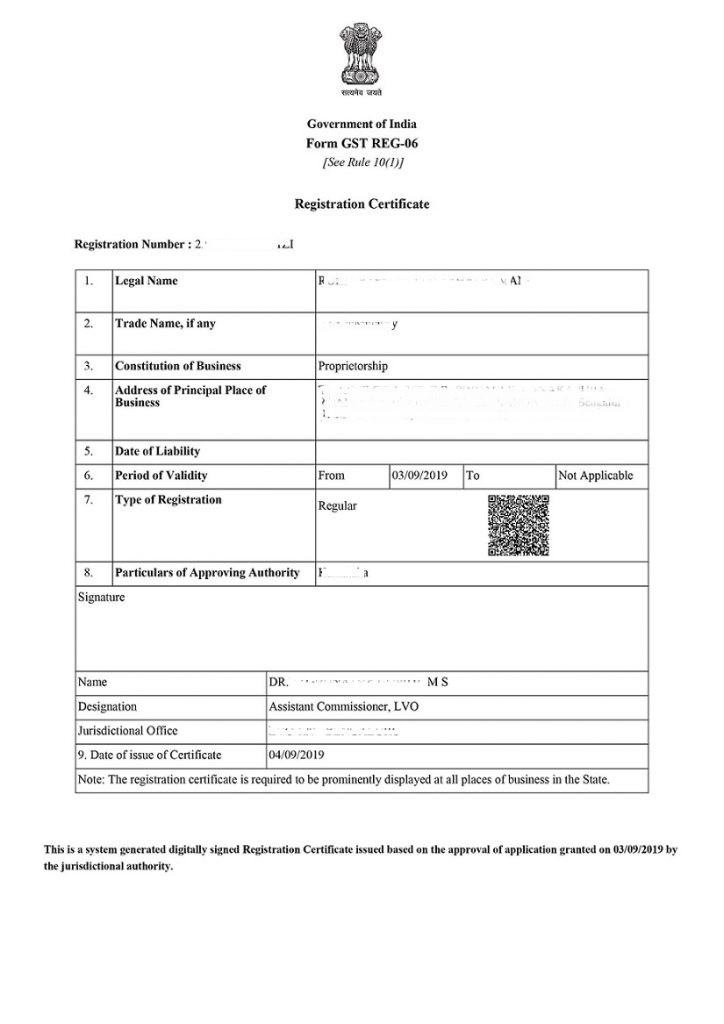
GST Registration and Filling
Introduced in 2017, it features slabs like 0%, 5%, 18%, and 40% for luxury goods as of late 2025, administered via the GST portal for registration, returns, and refunds.
Businesses exceeding turnover thresholds—Rs. 40 lakh for goods (Rs. 20 lakh in special states)—must register to comply and claim credits.Registration Requirements Mandatory for inter-state suppliers, e-commerce operators, or those under reverse charge, regardless of turnover; voluntary registration below thresholds enables input credits.
Required Documents For GST Registration
1.PAN Card
2.Aadhaar Card
3.Photo
4.Bank Details (cancelled cheque/statement)
5.Business address proof (electricity bill, rent agreement, property tax)
6.Email id
7.Mobile Number
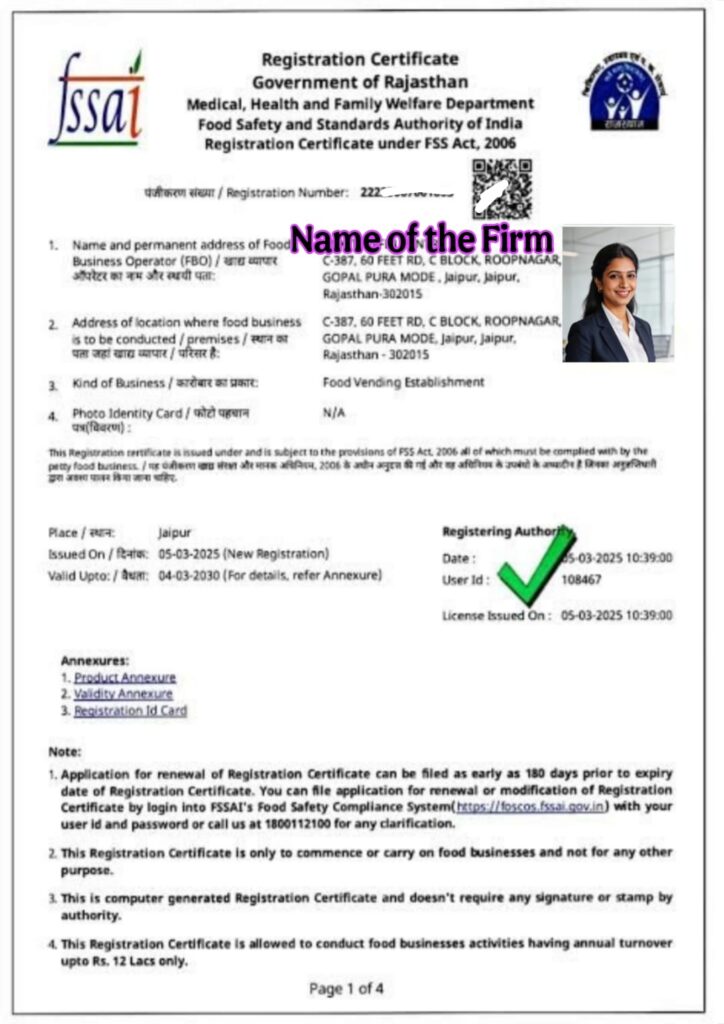
FSSAI License, issued by the Food Safety and Standards Authority of India, ensures food safety compliance for all food business operators (FBOs) in India, including manufacturers, traders, and retailers.
It comes in three types—Basic Registration,
State License,
Central License
based on annual turnover and business scale. Applications are submitted online via the FoSCoS portal with specific forms and fees.License TypesBasic Registration suits small FBOs with turnover up to ₹12 lakhs, such as petty retailers or hawkers using Form A, valid 1-5 years. State License applies to medium businesses with ₹12 lakhs to ₹20 crores turnover,
Required Documents For FSSAI Registration
1.PAN Card
2.Aadhaar Card
3.Photo
4.Bank Details (cancelled cheque/statement)
5.Business address proof (electricity bill, rent agreement, property tax)
6.Email id
7.Mobile Number
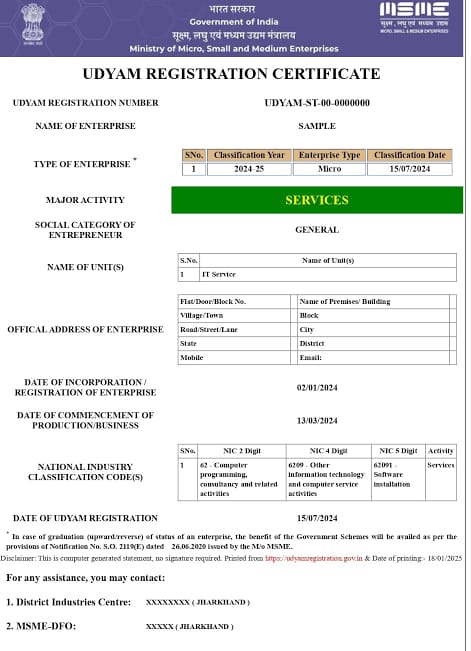
MSME stands for Micro, Small, and Medium Enterprises,
a classification under India’s Ministry of Micro, Small and Medium Enterprises to support businesses in manufacturing, services, and trade. Registration occurs via the Udyam portal, a free, online, self-declaration process that replaced earlier systems like Udyog Aadhaar. Classification Criteria
Enterprises qualify based on composite criteria of investment in plant/machinery/equipment and annual turnover, revised in recent budgets.
Micro: Investment ≤ ₹1 crore, Turnover ≤ ₹5 crore
Small: Investment ≤ ₹10 crore, Turnover ≤ ₹50 crore
Medium: Investment ≤ ₹50 crore, Turnover ≤ ₹250 crore
A business moves to a higher category if it exceeds limits in either criterion.
Required Documents For MAME Registration.
1.PAN Card
2.Aadhaar Card
3.Photo
4.Bank Details (cancelled cheque/statement)
5.Business address proof (electricity bill, rent agreement, property tax)
6.Email id
7.Mobile Number
Require Documents for Company Registration.
Private Limited/Limited/LLP Company/NGO/
1-For Director – Pan Card,Aadhar Card,Bank Statement(last 6 months),& 2 photographs.
2- For Nominee- Pan Card,Aadhar Card,Bank Statement(last 6 months).
3- Registration Office- Electric Bill,Rent Agreement,Property Tax Biil, NOC.
4-Authorized Capital-
5-Paid Up.
6-Main Object-
7-All Director Email Id-
8-All Director Mobile no.
All Documents Should be self attested.
Website Development We Deal In:
MLM SOFTWARE (ALL TYPE PLAN),REPURCHASE PLAN,SINGLE-LEG PLAN,BINARY PLAN,AUTO POOL,MATRIX PLAN,CROWD-FUNDING SOFTWARE,CRYPTO BASED SOFTWARE, CRYPTO PAYMENT GATEWAY,ONLINE SHOPPING WEBSITE,BULK SMS SERVICES
DOMAIN and HOSTING SERVICES
Water for Healthy Life
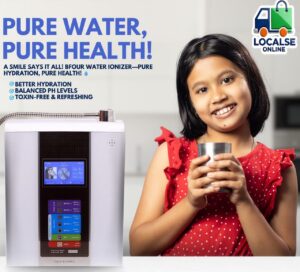
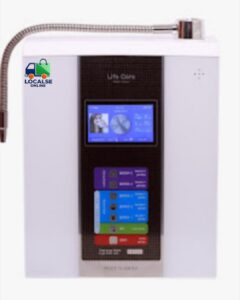
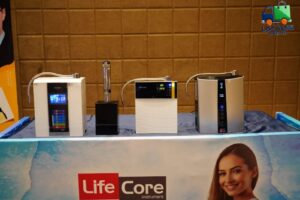
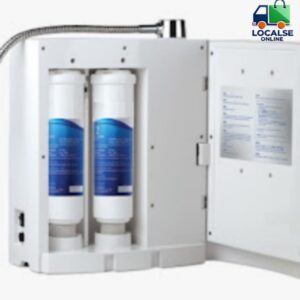
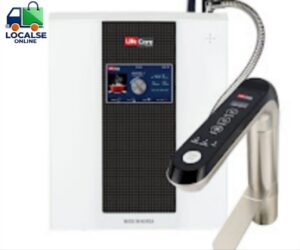
What is Lifecore machines
Lifecore Instrument Inc. is a Korean manufacturer specializing in hydrogen alkaline water ionizers with multiple international patents in water electrolysis and purification.In India, Lifecore machines are marketed mainly through Bfour Exim and similar distributors as premium countertop water ionizers for home and small commercial use.Main models and technology Popular models include Lifecore-5000 and Lifecore-6000 series (also branded WIZ.on-5000/6000), with 7–11 platinum-coated electrode plates depending on configuration.
These machines typically offer multiple pH levels (separate alkaline, purified, and acidic modes) using SMPS power supply, dual auto-cleaning, and hydrogen concentration in the range of about 200–1200 ppb.
Key features
Core features usually include: one-touch operation, automatic self-cleaning (reverse polarity/flow), color or voice-guided interface, multi-language support, and wall or countertop installation options.